
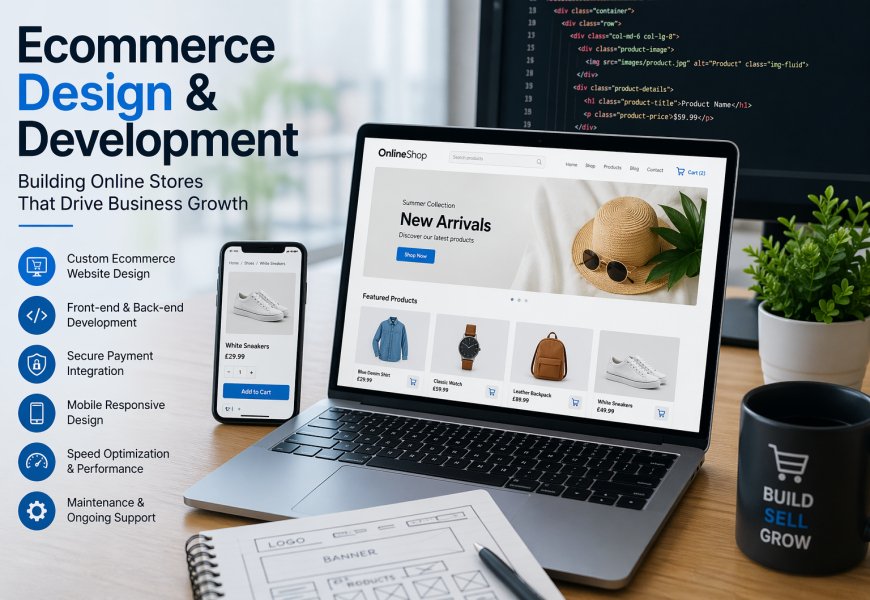
In today’s rapidly growing digital commerce landscape, having an online store is no longer a choice but a necessity. However, simply adding products for sale does not create an effective eCommerce site. That’s where eCommerce design & development come into play.
The eCommerce developer is the most important part of any online business. They create a website that is quick, secure, easy to use, and will be optimized for conversions. Whether you’re starting a new online store or you want to make improvements to an existing one, knowing what an e-commerce developer does can help you with the decisions you make in your business.
If you’re looking for professional services, there are plenty of companies such as Loyal Web Solutions that specialize in helping businesses design and develop high-quality eCommerce websites in the UK.
What is e-commerce design & development?
E-commerce design & development is the process of creating, designing, and maintaining online stores where businesses sell products or services.
E-commerce design & development includes the following:
- Website design (UI/UX)
- Backend development
- Integrating a payment gateway
- Developing product management systems
- Optimize security and performance optimally.
An eCommerce developer is responsible for both the technical and functional elements of the site to provide a seamless shopping experience.
What Does an eCommerce Developer Do?
An eCommerce developer is tasked with constructing and overseeing online stores from inception to completion. Their work combines technical expertise with business understanding.
1. Create and Design an Online Store
An online store is a website that provides a way for your business to sell products or services to customers. Developers create an attractive, user-friendly site that is aligned with your branding.
- Custom theme and layout.
- Responsive mobile site.
- Easy navigation for customers.
Making it easier for customers to see, pick out, and purchase products from your online store.
2. Front-End and Back-End Development
eCommerce developers work on both sides of an eCommerce website.
Front-end development is what the customer sees (design, buttons, and product pages), and back-end development is what is behind the scenes (the server, databases, and logical operations).
They build systems to create smooth shopping experiences through fast product delivery.
3. Secure Payment Gateway Integration
One of the most important functions of eCommerce developers is to integrate secure payment and transaction systems.
- Credit card and debit card transactions
- Other payment methods (UPI, wallets, etc.)
- Secure checkout and payment systems
All ensuring that all transactions are safe and secure.
4. Improve Website Performance
For an eCommerce website, speed can play a huge role in your sales. To improve speed, eCommerce developers make sure:
- Website pages load quickly.
- The site is mobile-friendly.
- The server responds quickly.
All of which can improve shopping experiences and decrease the chances of your customers not completing their purchases as a result of slow speeds.
5. Protecting Security and Data
Security is one of the most important aspects of eCommerce. To ensure the security of an eCommerce site and its customer base, eCommerce developers.
- Install SSL certificates.
- Secure customers’ data
- Stop fraud and hacking.
And they are also responsible for ensuring that their websites comply with all security standards.
6. Third-Party Integration
Many eCommerce sites rely on a wide variety of tools. eCommerce developers can integrate your site with the following:
- Shipping systems
- CRM systems
- Marketing tools
- Analytical tools
Integrating these tools allows for an efficient automated process.
7. Maintenance and Updates
The job doesn’t end after launch. Developers continuously:
- Fix bugs
- Update features
- Improve performance
- Add new functionalities
eCommerce platforms require ongoing improvements to stay competitive.
Key Skills Required for Ecommerce Development
An experienced eCommerce developer needs to be proficient in these technical capabilities:
Technical Skills
- HTML & CSS
- Javascript
- PHP, Python, or other backend programming languages.
- Database management like MySQL, etc.
Industry Knowledge
- Shopify
- Woo Commerce
- Magento
All Types of Soft Skills
- Problem-solving
- Communication
- Business understanding
Why Ecommerce Design & Development Matters
Investing in professional eCommerce design and development offers many advantages for a company. Some of the key advantages include:
- Increasing sales and conversions
- Improving user experience
- Establishing brand credibility
- Scaling operations easily
The creation of a well-developed website can have a significant positive impact on both revenue and customer satisfaction.
Why Hire a Professional E-commerce Developer?
Although there are a variety of do-it-yourself (DIY) platforms available, using the services of an expert will provide the following:
- Custom solutions that are particular to your business;
- Superior performance and scalability;
- Sophistication in security;
- Continuous support for the technology involved.
Agencies like Loyal Web Solutions are professionals that can quickly develop, deploy, and maintain complete e-commerce solutions—helping businesses grow online.
FAQs About E-commerce Developers
1. What is the function of an e-commerce developer?
The e-commerce developer operates the backend of e-commerce sites, creating an overall platform to allow customers to purchase from your store.
2. How do e-commerce and web development differ?
Although both types of developers create and maintain a website, a web developer’s duties will probably differ from those of an eCommerce developer in several ways, such as having knowledge of payment processing and websites designed for eCommerce that require more than just having design elements.
3. What eCommerce platform do most eCommerce developers use?
Popular eCommerce platforms are Shopify, WooCommerce, Magento, and other custom-built solutions.
4. Is there a difference in price for developing a website?
Yes, pricing for an e-commerce website depends on how many options for the website to have, complexity of design, and whether or not the options need to be customized.
5. Why is e-commerce development beneficial to a small business?
Having an e-commerce website is a way to advertise and market a business by reaching customers that regularly purchase through the internet.
Conclusion
A successful online business needs the expertise of an e-commerce developer, who will be responsible for creating a great user experience by creating intuitive user interfaces, secure checkout processes, and smooth website performance.
If you want to build your online store effectively, using professional e-commerce design & development is a must. Working with a company that has years of experience in eCommerce development like Loyal Web Solutions can give you the tools and resources to create an effective eCommerce website that can grow, scale, and convert!
Interested in growing your online business? Start your e-commerce journey with our professional development solutions!